
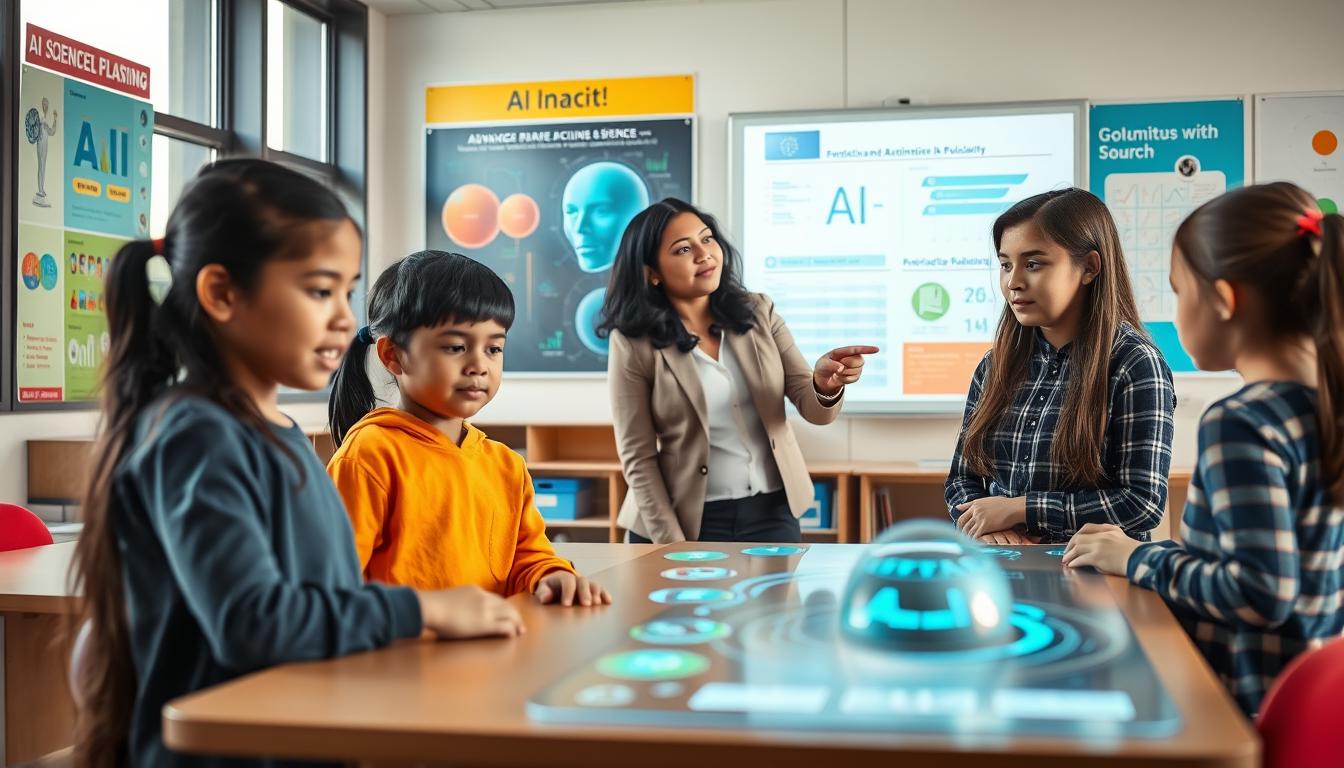
Can artificial intelligence revolutionize the way we learn? As we step into a new era of technological advancements, the question on everyone’s mind is: how will AI shape the future of education?
AI technology in schools is no longer a distant dream; it’s a reality that’s transforming the educational landscape. With AI-powered education solutions, students can now access personalized learning experiences that cater to their individual needs.
The benefits of AI in learning are numerous, from enhancing student engagement to improving academic outcomes. As we explore the potential of AI in education, it’s clear that this technology has the power to make learning more effective and enjoyable.
Key Takeaways
- AI is transforming the educational landscape with personalized learning experiences.
- AI-powered education solutions enhance student engagement and academic outcomes.
- The future of education is being shaped by AI technology in schools.
- AI in education offers numerous benefits, including improved learning effectiveness.
- Embracing AI in education can lead to a more enjoyable and effective learning experience.
Understanding AI Technologies Transforming Education
Artificial intelligence is transforming the educational landscape with innovative technologies that are changing the way we learn and teach. The use of AI in education is not just a trend; it’s a revolution that is making learning more personalized, efficient, and accessible.
Key AI Technologies in Today’s Classrooms
Several AI technologies are being integrated into classrooms to enhance the learning experience. These include:
- Intelligent Tutoring Systems (ITS) that provide personalized learning experiences for students.
- Natural Language Processing (NLP) tools that help in grading, feedback, and language learning.
- Machine Learning algorithms that analyze student data to predict performance and identify areas of improvement.
How AI Is Changing Traditional Learning Models
AI is not just supplementing traditional learning models; it’s transforming them entirely. By providing real-time feedback, automating administrative tasks, and offering personalized learning paths, AI is making education more effective and engaging.
| Traditional Learning Model | AI-Enhanced Learning Model |
|---|---|
| One-size-fits-all approach | Personalized learning experiences |
| Limited feedback mechanisms | Real-time feedback and assessment |
| Manual grading and administrative tasks | Automated grading and task management |
By embracing AI technologies, educational institutions can create more inclusive, effective, and engaging learning environments that prepare students for the future.
How to Identify Opportunities for AI Implementation
The key to successful AI adoption in education lies in recognizing the areas that can benefit most from technological advancements. To achieve this, institutions must undertake a thorough analysis of their current educational landscape.
Conducting a Technology Needs Assessment
A technology needs assessment is crucial for understanding the existing infrastructure and identifying gaps that AI can fill. This process involves evaluating current teaching methods, available technology, and the overall learning environment.
Mapping AI Solutions to Educational Challenges
Once the needs are assessed, the next step is to map AI solutions to specific educational challenges. This involves understanding how AI can address issues such as student engagement, personalized learning, and administrative efficiency.
Administrative Efficiency Opportunities
AI can significantly enhance administrative tasks, such as grading, attendance tracking, and student data management. By automating these tasks, educators can focus more on teaching and less on administrative burdens.
Learning Enhancement Opportunities
AI-powered education solutions can transform the learning experience by providing personalized learning paths, real-time feedback, and interactive content. This can lead to improved student outcomes and a more engaging learning environment.

By identifying the right opportunities for AI implementation, educational institutions can take the first step towards enhancing learning with AI and transforming education through AI. The potential benefits include improved student performance, increased efficiency, and a more adaptive learning environment.
| Opportunity Area | AI Solution | Potential Benefit |
|---|---|---|
| Administrative Tasks | Automated Grading and Attendance | Increased Efficiency |
| Personalized Learning | AI-driven Learning Paths | Improved Student Outcomes |
| Student Engagement | Interactive AI Content | Enhanced Learning Experience |
Step-by-Step Guide to Integrating AI Tools in Schools
To effectively leverage AI technology in schools, a comprehensive implementation strategy is essential. This involves several key steps that help ensure a smooth transition and maximize the benefits of AI in education.
Planning Your AI Implementation Strategy
The first step in integrating AI tools is to develop a clear implementation strategy. This involves:
- Identifying the specific educational challenges that AI can address
- Assessing the current technological infrastructure and its readiness for AI integration
- Setting clear goals and objectives for AI adoption
- Engaging stakeholders, including teachers, students, and parents, in the planning process
Selecting and Evaluating Educational AI Platforms
When selecting AI platforms, schools should consider several factors, including:
- The platform’s ability to integrate with existing educational systems
- The quality of customer support and training provided
- The platform’s data privacy and security features
- User reviews and feedback from other educational institutions
Key considerations include ensuring that the AI platform is user-friendly and aligns with the curriculum and educational goals.
Training Staff and Students on AI Systems
Effective training is crucial for the successful adoption of AI tools. This includes:
Creating Effective Training Programs
Training programs should be tailored to different user groups, including teachers, administrators, and students. The programs should cover both the technical aspects of using the AI tools and how to integrate them into the teaching and learning process.
Establishing Support Systems
Ongoing support is essential to address any issues that arise during the use of AI tools. This can include:
- Providing access to technical support resources
- Establishing a feedback mechanism to continuously improve the AI systems
- Regularly updating training programs to reflect new features and best practices
By following these steps, schools can ensure a successful integration of AI tools, enhancing the educational experience for both teachers and students.
Measuring the Impact of AI in Education
As educational institutions increasingly adopt AI technologies, measuring their impact becomes crucial for future development. The role of artificial intelligence in education is multifaceted, influencing various aspects of the learning process.
Establishing Baseline Metrics Before Implementation
Before integrating AI tools, it’s essential to establish baseline metrics. This involves assessing current student performance, teacher productivity, and existing educational outcomes. By doing so, educators can later compare these metrics to post-implementation data to evaluate the effectiveness of AI solutions.
Tracking Student Performance and Engagement
One of the key areas to focus on is how AI affects student performance and engagement. This can be measured through regular assessments and feedback mechanisms. AI-powered adaptive learning systems, for instance, can significantly enhance student engagement by providing personalized learning experiences.

Evaluating Teacher Productivity and Satisfaction
AI can also impact teacher productivity and job satisfaction. By automating administrative tasks, AI allows teachers to focus more on teaching and less on paperwork. Surveys and feedback sessions can help assess teacher satisfaction with AI integration.
Analyzing Return on Educational Investment
Finally, analyzing the return on educational investment (ROEI) is crucial. This involves comparing the costs of implementing AI solutions with the benefits they bring, such as improved student outcomes and increased teacher productivity. A simple table can illustrate this analysis:
| Investment | Cost | Benefit |
|---|---|---|
| AI-powered learning platforms | $100,000 | 20% increase in student engagement |
| Teacher training on AI tools | $20,000 | 15% increase in teacher productivity |
By carefully measuring the impact of AI in education, institutions can make informed decisions about future investments, ultimately shaping the future of education with AI.
Overcoming Common Challenges in AI Adoption
The adoption of AI in education is fraught with challenges, but understanding these challenges is the first step to overcoming them. As institutions integrate AI applications in the educational sector, they must address several key issues to ensure successful implementation.
Addressing Privacy and Data Security Concerns
One of the primary concerns with AI adoption is the protection of student data. Educational institutions must implement robust data security measures to safeguard sensitive information. This includes ensuring compliance with regulations such as FERPA and using secure AI platforms that prioritize data protection.
Ensuring Equitable Access to AI Resources
Another challenge is ensuring that all students have equitable access to AI-enhanced learning tools. Institutions can address this by implementing policies that promote digital equity, such as providing devices to students who lack access to them. This helps in enhancing learning with AI for all students, regardless of their background.
Managing Resistance to Technological Change
Managing resistance to AI among educators and staff is also crucial. This can be achieved through comprehensive training programs that not only teach how to use AI tools but also demonstrate their value in enhancing learning with AI. By fostering a culture that embraces technological innovation, institutions can overcome resistance and ensure a smooth transition.
By addressing these challenges proactively, educational institutions can harness the full potential of AI to improve learning outcomes. Effective strategies and a commitment to overcoming obstacles are key to successful AI adoption in the educational sector.
Conclusion: Preparing for the Future of Education with AI
As we have explored throughout this guide, AI is revolutionizing the educational landscape through ai-powered education solutions. By understanding the key AI technologies, identifying opportunities for implementation, and integrating AI tools, educators can transform education through AI.
The benefits of AI in education are multifaceted, from enhancing student engagement to improving teacher productivity. As we move forward, it is essential to continue measuring the impact of AI and addressing common challenges to ensure successful adoption.
By embracing AI-powered education solutions, we can create a more efficient, effective, and equitable education system. As we prepare for the future, it is crucial to stay informed and adapt to the evolving landscape of AI in education, ultimately transforming education through AI for the betterment of society.
FAQ
What is the role of artificial intelligence in education?
Artificial intelligence is transforming the educational landscape by providing personalized learning experiences, improving administrative efficiency, and enhancing student outcomes through AI-powered education solutions.
How is AI technology being used in schools?
AI technology is being used in various ways, including adaptive learning platforms, intelligent tutoring systems, and automated grading systems, to create a more effective and efficient learning environment.
What are the benefits of AI in learning?
The benefits of AI in learning include improved student engagement, enhanced teacher productivity, and better academic outcomes, ultimately leading to a more successful and fulfilling educational experience.
How can AI applications in the educational sector improve student outcomes?
AI applications can improve student outcomes by providing real-time feedback, identifying knowledge gaps, and offering tailored learning paths, resulting in more effective learning and improved academic achievement.
What is the future of education with AI?
The future of education with AI is expected to be highly personalized, with AI-powered education solutions continuing to evolve and improve, leading to a more efficient, effective, and enjoyable learning experience.
How can educators ensure equitable access to AI resources?
Educators can ensure equitable access to AI resources by implementing strategies such as device lending programs, providing training and support for underrepresented groups, and promoting digital literacy among all students.
What are some common challenges in AI adoption in education?
Common challenges in AI adoption in education include addressing privacy and data security concerns, managing resistance to technological change, and ensuring that AI solutions are aligned with educational goals and objectives.
How can the impact of AI in education be measured?
The impact of AI in education can be measured by establishing baseline metrics, tracking student performance and engagement, evaluating teacher productivity and satisfaction, and analyzing the return on educational investment.